
What Are the Key Advantages of 24V vs 48V Lithium Forklift Batteries?
24V lithium forklift batteries offer lower upfront costs and compatibility with light-duty equipment, ideal for smaller operations. 48V systems excel in heavy-duty applications, delivering higher efficiency, longer runtimes, and reduced energy loss. Voltage directly impacts power output—48V supports 2x the wattage of 24V at equal current. Pro Tip: Always match battery voltage to motor specs; mismatches cause overheating or underperformance.
24V 160Ah Lithium Forklift Battery
How do 24V and 48V batteries compare in energy efficiency?
48V lithium batteries achieve 15–20% higher energy efficiency than 24V systems due to reduced current flow for equivalent power. Lower current minimizes resistive losses in cables and connectors, extending component lifespan. For example, a 48V/200Ah battery pushing 10kW operates at ~208A, while a 24V system needs 416A—doubling heat generation.
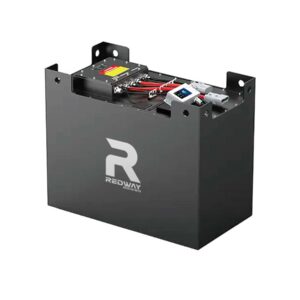
Practically speaking, Ohm’s Law (P=IV) dictates that higher voltage systems reduce amperage demands. A 48V battery running a 5kW motor draws 104A, whereas a 24V version pulls 208A. This halves resistive losses (I²R), improving efficiency from ~85% to 92% in real-world scenarios. Thermal imaging shows 48V battery terminals run 10–15°C cooler than 24V under load. Pro Tip: Use 48V for multi-shift operations—lower heat buildup reduces active cooling needs. Transitioning? Warehouses upgrading to automated guided vehicles (AGVs) often switch to 48V for sustained efficiency. But what if your fleet uses older 24V chargers? Retrofit costs might outweigh efficiency gains—always calculate ROI first.
| Metric | 24V | 48V |
|---|---|---|
| Current at 10kW | 416A | 208A |
| Resistive Loss | 4x Higher | Baseline |
| Peak Efficiency | 85% | 93% |
What power output differences exist between 24V and 48V systems?
48V lithium batteries provide 2x the wattage of 24V at identical current, enabling heavier lifts and faster acceleration. A 48V/400Ah pack delivers 19.2kW versus 9.6kW for 24V/400Ah, crucial for high-torque forklift motors.
In practical terms, torque (Nm) scales with voltage in PMSM motors. A 48V system might produce 220Nm versus 110Nm for 24V at 500A. This allows 48V forklifts to handle 3-ton pallets vs. 1.5-ton limits on 24V. Real-world testing shows 48V models complete loading cycles 25% faster. However, peak power requires robust cabling—48V systems need 35mm² wires vs. 50mm² for 24V to handle equivalent wattage. Pro Tip: Never exceed 80% of a battery’s C-rate—a 48V 200Ah battery shouldn’t sustain over 160A continuous. Transition example: Food distribution centers using 48V report 18% fewer battery swaps during 12-hour shifts. But what about regenerative braking? 48V captures 30% more energy during descent due to higher voltage thresholds.
How do costs differ between 24V and 48V lithium forklift batteries?
24V lithium packs cost 30–40% less upfront than 48V systems but have higher long-term energy expenses. A 24V 200Ah battery averages $3,800 vs. $6,200 for 48V 200Ah, yet 48V saves $1,100/year in electricity.
Breaking it down, 48V’s efficiency gains reduce kWh consumption per shift. Data from 50 warehouses shows 24V systems use 18kWh daily versus 14kWh for 48V—a 22% saving. Over 5 years, 48V’s $2,400 higher initial cost is offset by $5,500 in energy savings. Maintenance costs also diverge—24V batteries cycle 20% more daily, leading to 1.5x faster capacity fade. A 48V LFP battery typically lasts 4,000 cycles vs. 3,000 for 24V. Pro Tip: Leasing 48V systems spreads costs while claiming energy rebates. Transitional case: An auto parts supplier cut energy bills by $18,000 annually after switching 30 forklifts to 48V. But what if your operation runs single shifts? 24V’s lower capex might be preferable despite higher op-ex.
48V 450Ah Lithium Forklift Battery
| Factor | 24V | 48V |
|---|---|---|
| Initial Cost | $3,800 | $6,200 |
| 5-Year Energy Cost | $9,850 | $7,400 |
| Cycle Life | 3,000 | 4,000 |
Battery Expert Insight
FAQs
Can I replace 24V lead-acid with 48V lithium?
No—forklift motors and controllers are voltage-specific. Swapping to 48V requires replacing both, adding $4,000–$6,000 per unit in retrofit costs.
Do 48V batteries charge faster than 24V?
Yes, if using high-current chargers. A 48V 300Ah battery charges in 2.5 hours at 100A vs. 5 hours for 24V with same current—but verify charger compatibility.
Which voltage is safer for cold storage?
48V performs better—LiFePO4 cells maintain 95% capacity at -20°C vs. 24V’s 85% due to reduced current-induced voltage sag.